
Search Arizona Civil Court Records
Arizona civil court records include case files from all 15 counties created by Superior Courts and Justice Courts. They hold details on lawsuits, small claims, evictions, and civil judgments. Most records can be searched online through the state portal at no cost. Each county also keeps paper files at the local courthouse where access is open to the public under state law.
Arizona Civil Records Quick Facts
Online Access to Arizona Civil Court Records
Arizona runs two main systems for civil court records. PACCI is free for looking up cases, while eAccess costs money to buy and download court documents. Both systems cover most courts across the state and can be used any time from home or work. PACCI needs no login for basic search.
The Public Access to Court Case Information portal covers most courts in Arizona including all Superior Courts and most Justice Courts across the state, giving users access to information from 177 of the state's 184 courts. You can search by name, case number, or business name to view the case type, filing date, parties, and docket entries. The system does not display full documents but you can see who filed what and when, making this the best tool for most people who need civil court records.
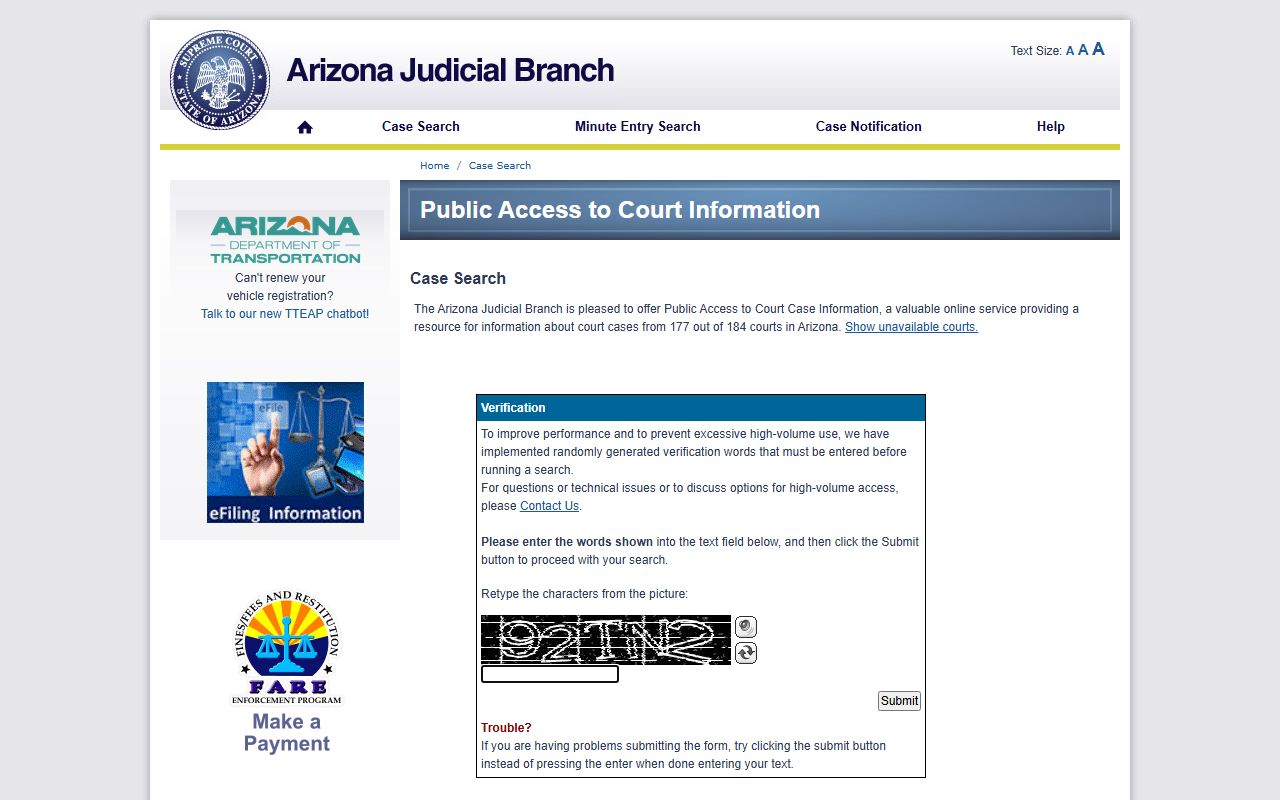
The portal works on any device with search results coming back in seconds for most queries. You can print or save the docket page. No cost applies for basic search.
The eAccess system handles document downloads covering Superior Court records from July 2010 forward. You must create an account. Each document costs ten dollars after a free first page preview. Heavy users can buy monthly plans ranging from eighty dollars to ten thousand dollars based on volume needed, though this system does not include sealed, juvenile, mental health, or adoption records. It is best for lawyers, businesses, and others who need full copies of court filings.
Arizona Civil Court System Structure
Arizona has two types of trial courts. Superior Court is for big cases while Justice Courts handle smaller claims and evictions. Which court hears your case depends on the amount at stake.
Superior Court has jurisdiction over all civil cases exceeding ten thousand dollars in value. Each county has one Superior Court, though some counties have branch locations in different cities. Superior Court also hears appeals from Justice Court. All fifteen Arizona counties maintain a Superior Court with a Clerk office that keeps the civil court records where cases follow formal rules and most large lawsuits, contract disputes, and injury claims are filed.
Justice Courts handle civil cases up to ten thousand dollars including small claims cases up to five thousand dollars that use simpler rules and do not require a lawyer. Justice Courts also have exclusive jurisdiction over eviction cases, which state law calls forcible entry and detainer actions. Each county has multiple Justice Court precincts with Maricopa County having twenty six while small counties may have just one or two.
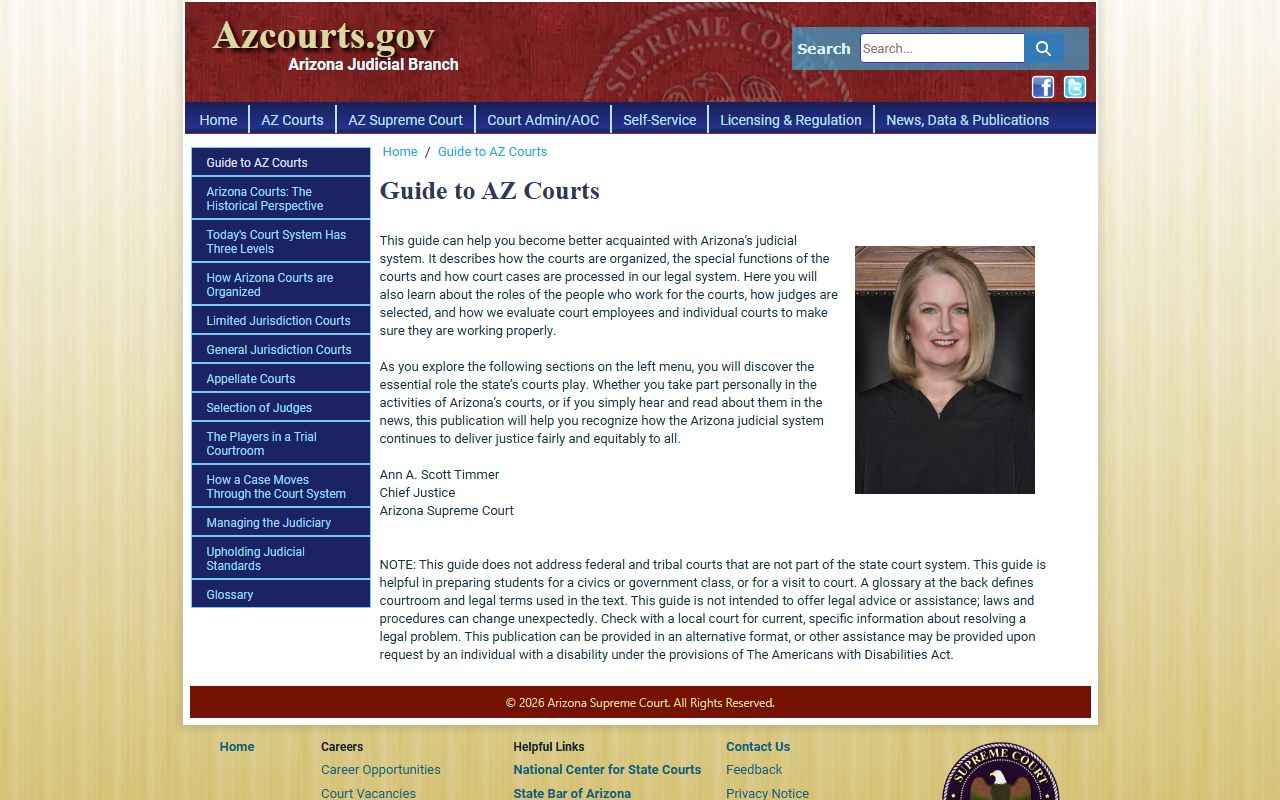
The Arizona courts website at azcourts.gov has a full guide. It explains which court handles each case type. It lists contact info for all courts.
Most civil litigation happens at the county level. The state Supreme Court handles appeals. So does the Court of Appeals. Neither handles new civil cases.
Forms and Resources for Arizona Civil Cases
Arizona courts offer free forms and guides for people who file civil cases on their own. The Self-Service Center website helps with step by step instructions for common case types where you can download forms, watch videos, and read guides about court procedures.
The Self-Service Center Resources page has forms for small claims, eviction defense, debt collection, and protective orders. All forms are PDF files. You can fill them out on your computer. You can also print and fill them by hand. Instructions come with each packet. Many forms come in English and Spanish.
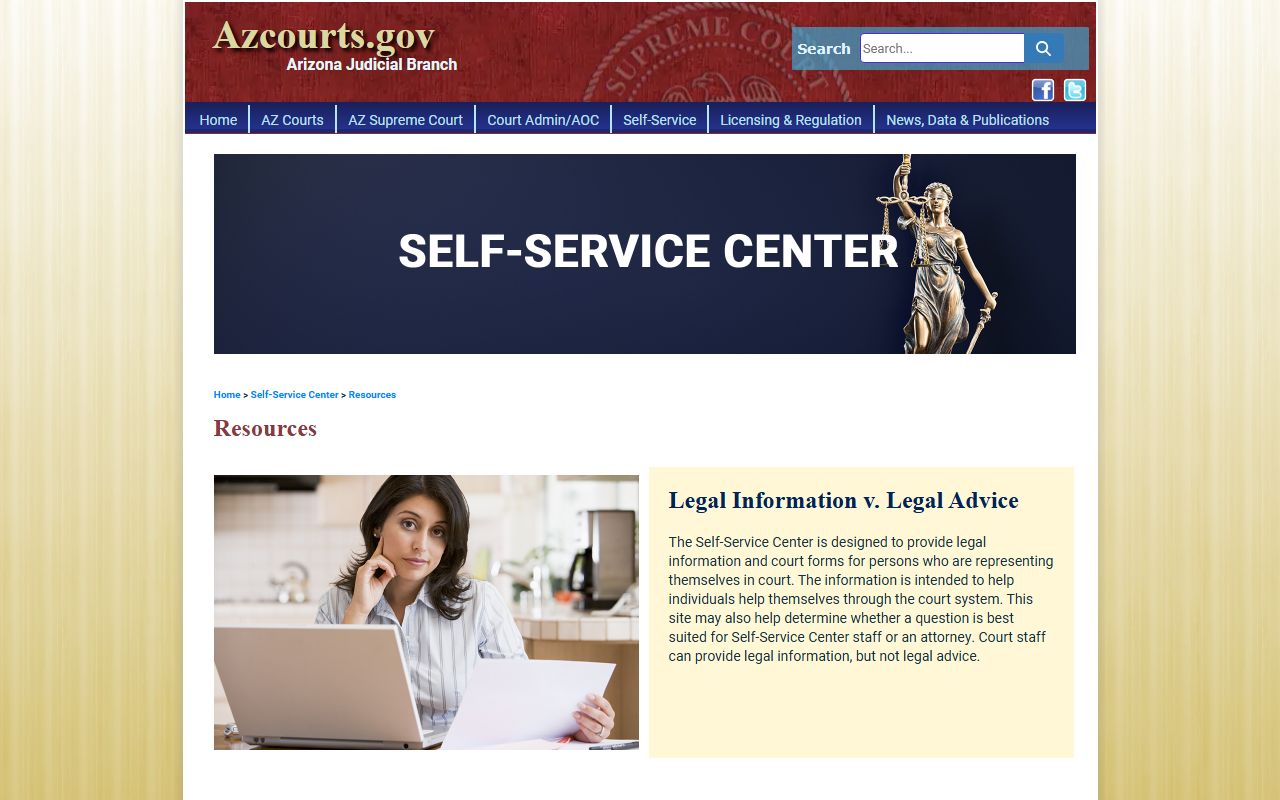
The site also links to legal help. It connects you to legal aid groups. It connects you to law libraries. It connects you to lawyer referral services. Each county has a Self-Service Center at the courthouse. Staff can answer questions about forms and procedures.
The eFiling portal lets parties submit documents online. Attorneys must use it. State court rules require eFiling for lawyers in civil cases. Self-represented people can file electronically. But they do not have to.
Types of Civil Records in Arizona Courts
Civil court records vary by case type with each case creating a file where documents differ based on the lawsuit. All files share some basic parts. The complaint starts the case and states what the plaintiff wants while the answer is the defendant's response, and these two documents frame the dispute.
Other common records include motions, orders, judgments, and dockets. A motion asks the court to do something while an order is the judge's decision. The judgment is the final ruling that ends the case. The docket is a log of every action from start to finish.
Money judgment cases seek payment of debt or damages. These make up a large share of filings. The judgment states how much the defendant owes. You can enforce it through wage garnishment. You can also use bank levies. Contract disputes, personal injury claims, and debt collection suits all result in money judgments when the plaintiff wins.
Eviction records are another major category. Landlords file forcible entry and detainer actions. These actions remove tenants. Justice Courts handle them. The records show rent owed. They show lease terms. They show the outcome. A writ of restitution is issued if the landlord wins, giving the landlord the right to take back the property within five days after the judgment.
Protective order records involve requests for court orders. These orders prohibit contact or harassment. The AZPOINT system is a statewide database. It includes orders of protection. It includes injunctions against harassment. It includes workplace harassment injunctions. These records are public. Some details may be redacted for safety.

Case files may contain other documents. These include subpoenas, depositions, exhibits, and settlement agreements. The size of each file varies. It depends on how complex the case is. It also depends on how long it takes to resolve.
Note: Not all documents in a case file are available online through PACCI or eAccess.
Arizona Civil Court Record Fees
Fees depend on what you need. Basic case lookup is free. PACCI charges nothing. Certified copies cost money. Document downloads cost money. Each county sets its own fees.
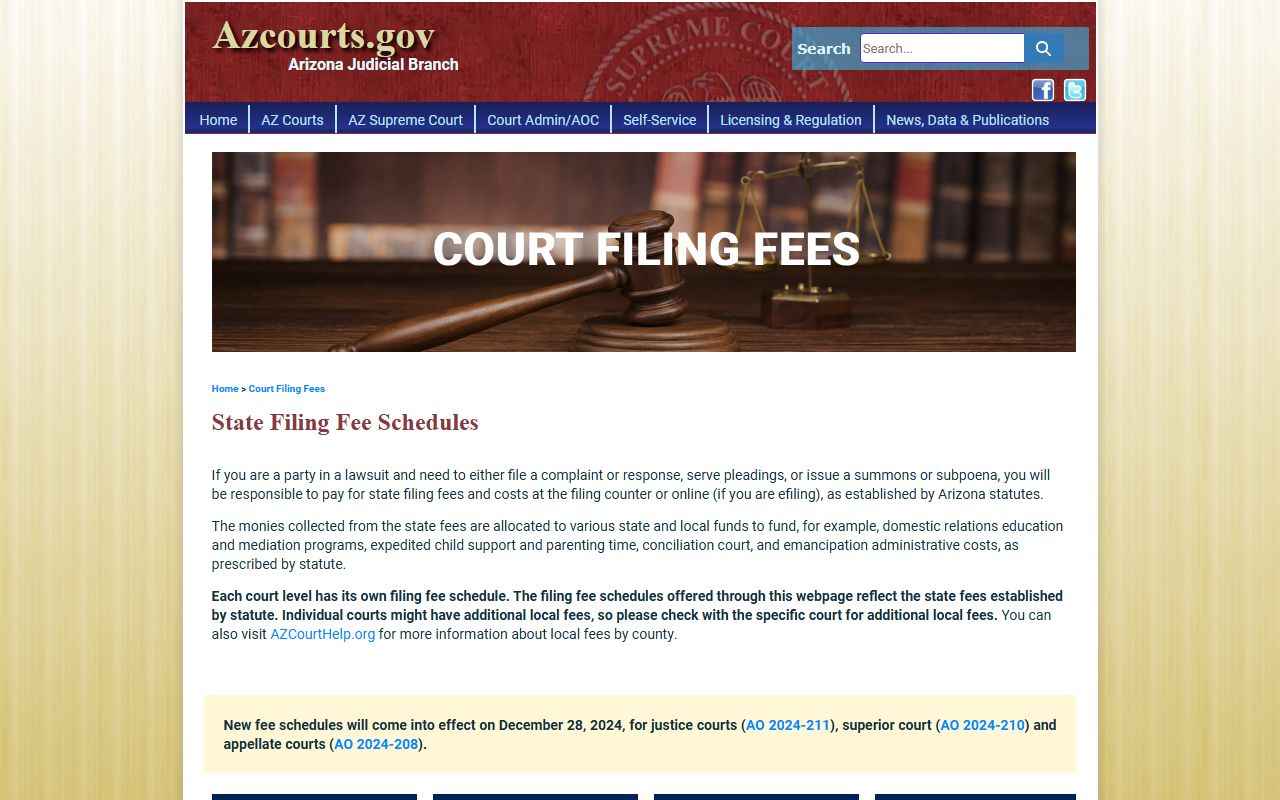
Statewide fee rules are posted on the Arizona Courts filing fees page. State law allows clerks to charge fifty cents per page. Certification costs thirty five dollars in most counties. Research fees may apply. They cost thirty five dollars per year. You pay them if you do not provide enough case information.
Postage and handling adds eight dollars. Electronic copies on CD or DVD cost thirty five dollars per case. Some counties charge this fee. Payment methods vary by location. Most accept cash. Most accept checks. Most accept money orders and credit cards.
Filing a new case costs more than getting copies. Superior Court filing fees range from two hundred sixty three to three hundred sixty seven dollars. The amount depends on the case type. Justice Court civil complaints cost about one hundred fourteen dollars. Small claims cost fifty eight dollars. Eviction actions cost sixty nine dollars.
Fee deferrals are available. Low income filers can get them. You ask the court to waive fees. You submit a deferral application. You provide proof of income. The judge decides if you qualify.
Arizona Law on Civil Court Records Access
Public records law gives every person the right to inspect and copy court records. The state constitution protects this right. Statutes protect it too. You do not need to be a party. You do not need to state a reason. Courts must allow access unless a law requires sealing.
Arizona Revised Statutes Section 39-121 is the main law. It states that public records in the custody of any officer shall be open to inspection by any person at all times during office hours. This applies to civil court records. County clerks keep them. If a custodian denies access without legal basis, you can seek a court order.
Some records are sealed by law. Adoption records are not public. Juvenile records have limited access. Mental health proceedings are confidential. Sealed settlements may not be disclosed. A party can ask the court to seal records. You file a motion with good cause shown. The judge holds a hearing. The judge decides if sealing is justified.
Arizona Revised Statutes Section 22-201 defines Justice Court jurisdiction. It gives Justice Courts exclusive original jurisdiction over civil actions where the amount in controversy does not exceed ten thousand dollars. This statute also covers eviction cases.
Arizona Revised Statutes Section 12-284 sets the fees. Clerks may charge fifty cents per page. They may charge thirty five dollars for certification. These fees apply statewide.
Accessing Civil Records by County in Arizona
Each county maintains its own Clerk office. The clerk keeps all Superior Court records. This includes civil, criminal, probate, and family court records. Access procedures vary slightly by county. But all follow state law. Most use the same online systems.
Large counties have multiple courthouses. Maricopa has four complexes. Pima has several locations. You can access records at any of them. Visit during business hours. Smaller counties have one main courthouse. It is usually in the county seat. Some rural counties store older records offsite. Call ahead to retrieve them.
Justice Court records are separate from Superior Court records. Each precinct keeps its own files. You must go to the specific precinct. That is where the case was filed. Online access is available through county websites in some areas. The statewide PACCI portal also works for participating courts.
Maricopa County offers extensive online access. The Superior Court Docket provides free case lookup. Search by name or number. Justice Courts in Maricopa have their own system. Pima County uses the Agave system. Most other counties rely on PACCI.
Browse Arizona Civil Court Records by County
Select a county below to find local court contact information, online search systems, and fee schedules for civil court records in that area of Arizona.
Civil Records in Major Arizona Cities
Find civil court record information for residents and cases in Arizona's largest cities. Each city page explains which county court handles civil filings for that location.